Saturday, 19 September 2026

CHASING 'FOXES': LONELINESS, MOVIE MAGAZINES, AND JODIE FOSTER


I always tell people that I discovered Jodie Foster long before she became a household name. While I can't pin down the exact moment I became a fan, I vividly remember spending my early teenage years captivated by her work. I felt a deep, almost instinctual kinship with her in films like The Little Girl Who Lives Down the Lane, Echoes of a Summer, and even the wonderfully wacky Freaky Friday. There was an underlying quality to her performances that resonated with me on a personal level—a quiet, private connection that lasted for years.

Before reaching a turning point in my fandom, I remember the pure thrill of anticipation when Foxes was set to hit theaters. I was a sophomore in high school at the time, eagerly tracking its release for months through the pages of my movie magazines. Seeing her step into that role was electric; she anchored the story with a raw maturity that proved she was rapidly evolving beyond childhood stardom.
Looking back, it was Foxes that truly defined that chapter of my youth. The film’s world mirrored my own; its gritty, neon-drenched streets and the pulsing, bittersweet rhythm of Donna Summer's "On the Radio" felt entirely intertwined with my isolated world, providing a warm, electric escape from the grey, rain-slicked pavement of Montreal. As someone who spent so much time alone, that raw, unvarnished portrait of an unravelling youth completely captivated me, cementing the film as a definitive favorite during a time when my own world felt heavy.
That long-standing bond with Foster lasted right up until The Accused. By then, I had finally taken down my Foxes marquee poster—the one featuring Scott Baio that had anchored my bedroom wall for years. The Accused changed everything. Watching her meteoric rise transform her into a global icon, I realized her immense talent was no longer my well-kept secret. She belonged to the world now, and it was time to gracefully let her go.

Until next post—Martin


Saturday, 8 August 2026

THE ‘SCRUPLES’ TV MOVIE


The 1980 Scruples miniseries on CBS was pure, addictive television. It perfectly packaged glamour, elite success, and scandalous romance among Beverly Hills' most beautiful people. Capitalizing on that frenzy, ABC picked up the mantle just over a year later. On Friday, May 22, 1981, the network premiered a sleek new television movie, aiming to transform Judith Krantz's bestselling world into the next great weekly soap opera.

I still remember thinking how bizarre it was to schedulea prime-time TV event on a Friday night. In an era before VCRs were a household staple, you couldn't just pause live TV or tape it for later, so I chose a night out at the theater with friends instead. For years, I felt like I had missed a massive piece of 1980s pop culture history. It took me exactly forty-five years to finally sit down and watch it, but the soapy drama absolutely lived up to the hype.


Picking up right where the original miniseries left off, the story immediately plunges its characters into turmoil. Billy, recast with the late Shelley Smith, tragically miscarries and learns she can no longer bear children. To make matters worse, she discovers that her husband, Vito (James Darren replacing Nick Mancuso), desperately needs an heir. Adding financial ruin to personal heartbreak, she is also forced to fight a ruthless business takeover designed to steal her beloved, world-famous boutique right out from under her.


Meanwhile, the fairytale romance between Spider and Valentine (now played by Dirk Benedict and Olga Karlatos) hits a massive speed bump with the arrival of Melanie. Recast this time around with Priscilla Barnes, Melanie completely throws a wrench into their happy ending by claiming she is pregnant with Spider’s baby—or at least, that is what she wants him, and us, to believe.


While these core relationships sizzle, the film's momentum slows down with its least interesting subplot. This thread involves Nora Gregson (Elizabeth Edwards), a would-be actress who finds work at the boutique, alongside a side story about a theft committed by her brother and his roommate. Though fine on paper, it ultimately lacks the spark needed to keep viewers engaged. Fortunately, the main cast delivers solid performances across the board, with the absolute standout being the brilliant and widely missed Jessica Walter as Maggie McGregor (a role originated by Connie Stevens). Playing a sharp television gossip reporter, she completely steals every single scene she is in. 


Ultimately, it’s a true shame that nothing ever came of this unsold pilot. Much like Dallas or Dynasty, it possessed all the right ingredients to become a fantastic weekly series. In fact, screenwriter Camilla Marchetta actually worked on both of those iconic prime-time soaps, proving she clearly had the talent and the vision to make a weekly version of Scruples truly shine.


Until next post--Martin


Saturday, 13 June 2026

RIP Judith Barnard, of Best-Selling ‘Judith Michael’ Fame


Judith Barnard, the half member of the husband and wife team behind the Judith Michael’s name, passed away this past month of heart failure. She was 94. If you recall, she is mostly responsible for the megahit DECEPTIONS in 1982. She wrote the narrative and her hubby predominately served as an editor. But together they created magic, launching 11 bestsellers in their joining careers.


I discovered them in 1985 after watching the TV miniseries adaptation of DECEPTIONS starring Stefanie Powers. Of course, I was clueless about the fact that they were hiding behind the Judith Michael name. Just like the mini, I devoured the book, and later on started collecting their work.  Fast forward to 2026, I not only still own all of their paperbacks but I succeeded throughout the years in amassing their hardcover first editions as well. I’m really proud of both collections. 


It saddens me, however, to know that there won’t be any more Judith Michael novels in the future—though I already had a hunch about that since their last book THE REAL MOTHER was published in 2005. Yet, silly as it may sound, I still had a tiny glimmer of hope that it would happen. But like the woman behind the name and the many successful and least successful compatriots alongside her, the subgenre has officially passed on. Yes, the glitz and glam novel is pretty much a thing of the past. Thankfully I still have tons and tons of unread ‘80s books in my house to enjoy. 


So here’s to you Judith Barnard.  Thank you for making this gay man who he is by giving him what he wants, a little radiance of escapism from life’s hardships.


Until next post,

Martin 


Saturday, 11 April 2026

'PLACES' BY ROBIN ST. THOMAS


Here we go. My first re-read of 2026: PLACES by Robin St. Thomas. Why that one? Well, easy: I totally have a soft spot for it. Problem is I seem to be the only one who does. Most readers of the genre would rather forget about it. I don’t know why since I think it is truly enjoyable, if not remarkable in its own right. Yes, I agree, the book is far from being perfect: there are some spotted inconsistencies, typos, exclamation points everywhere. However, it’s a Zebra book. It’s what is expected. Still, it is a fun read. It has a fine heroine, an intriguing plot, and an opulence set during the late ‘60s, early ‘70s. Everything I need in a trashy book.


The story centers on Aurora Styles, an orphan, who as a late teen, dreams of cinema and its male stars from which she indulges in sexual fantasies. She soon ends up being deflowered by her older and more experienced foster brother who, later on, urges her to go to New York to study acting. Once there, she befriends a Meryl Steep-like fellow student who ends up being more of a troubled soul. She also comes across a pair of socialites in the form of a gay prince and an older countess who will be favorable in her quest for stardom, amongst other things. Throw into the mix a couple of lovers, a woman hunt related to a possible murder case, and what you end up with, besides adding even the kitchen sink, is the innermost urge to sit down and finish this thing. 


PLACES definitely goes places, like New York, Hollywood, Rome, London...  However, the authors (more on that later) linger little on settings, focusing more on plot and characters, or should I say character, for besides the central one, little else is spotlighted. Clearly, the novel is all about Aurora achieving her goal of becoming a famous actress. Though she does eventually get there (in about a third of the book), PLACES takes a surprising turn by making her lose it all which ends up giving this would-be rags to riches novel a second wind.


As for the secondary characters lacking development, this may be a tad unfair on my part. The authors do try to put some emphasis on them. Aurora’s Meryl Streep-like actress friend is one good example. St. Thomas gradually make a point of showing the psychological downfall of the quirky character. The same can be said about Aurora’s two socialite friends. Sexual identity and ageism regarding these two are notably hint at. Not to mention the addition of a gigolo-type character who temporarily puts a dent in their rock solid friendship.


Simply put, 1987 PLACES is indeed quite the paperback. Oh it may be flawed but authors Robin Stevenson and actor Tom Bade (1946-2005) do a good enough job at keeping the reader intrigued. Seven other Hollywood novels follow this reviewed title, including SWITCHBACK for which they drop their nom de plume, and I look forward to each and every one of them.


Until next post—Martin


 Actor / novelist Tom Bade from 1971 SOME OF MY BEST FRIENDS ARE... (to be reviewed).

Thursday, 25 December 2025

‘HAROLD ROBBINS’ THE PIRATE’ MINISERIES (1978)


It was during a three month break from a minor surgery (busted knee) that I took the plunge and watched the two part TV screen adaptation of
THE PIRATE, based on the Harold Robbins novel of the same name. Mind you, I still hadn’t opened the book and I was really hesitant to watch the miniseries. Like many of you, I always prefer reading the material on which a film or a mini is based before catching it on screen. However, since I was a tad curious and, more importantly, far from being of sound and mind (I blame the meds), I finally screened it. 


THE PIRATE dives into the melodrama rather quickly when the adopted son (Franco Nero) of a powerful Arab couple ends up ruling the vast oil fortune of his country without knowing he’s actually born to Jewish parents—a secret kept from him for the most part of the miniseries.  His charmed life is shown via many scenes involving the Jet Set where our protagonist ends up having a torrid affair with an American debutante, played by the delightful Anne Archer. So enamoured he becomes of her he chooses to leave his Muslim wife and daughters. Thus begins his many problems, one of which resulting in his eldest daughter (the recently departed Olivia Hussey) joining a clan of rebels to destroy and eventually kidnapping his son from Archer.

I could go on and on about the plot but, like I always say, this would lead me to reveal too much and spoil everything, as if I had not done it already. Anyway, yes, I had fun watching this miniseries. Not my favorite Robbins adaptation (penned by Julius J. Epstein who co-authored the silver screen classic CASABLANCA) but still enjoyable to a certain degree.  Franco Nero is fine as the adopted son. But the real star is without a doubt Anne Archer who gives just the right dose of camp every time she’s on-screen. In fact, she seems to be the only one having fun. In any event, check her out in this if you can. 

I know the mini is still hard to find. It took me years to finally be able to watch it. THE PIRATE certainly deserves to be available everywhere on disc or on a popular streaming service. Maybe there’s a copyright issue or something.  I have no idea. But like the TV remake of VALLEY OF THE DOLLS (1981) and Robbins other small screen adaptation of THE DREAM MERCHANTS (1980), it sure deserves a wider viewership, however average—well, to me, anyway—a miniseries can turn out to be.


Until next post—Martin


Sunday, 27 July 2025

‘BEVERLY HILLS’ BY PAT BOOTH


I came upon Pat Booth’s BEVERLY HILLS (1989, Crown) while visiting a little Paris bookshop near the Seine. The book was in hardcover, a first edition, and on sale. Naturally I could not leave it behind. Except I already owned a paperback copy. However this one had a different cover: a stunning-looking blond clad in a one piece bathing suit. So you can imagine just the thought of leaving it and her behind already made my heart quicken. So without further hesitation I grabbed the book and never let go.


I came back to Canada with a bunch of used, and not so used, novels. It took me a whole year to finally get to BEVERLY HILLS, finishing it up last month. Suffice to say I did enjoy the book. Not Pat Booth’s best, but I had a real good time overall. Her narrative, though heavily padded, is still quite impressive (almost lyrical), as are her sex scenes, which are aplenty. The characters are memorable, even likable in some cases. The plot has a few inconsistencies that ended up irking me a bit (the kind that are just there to move the story along) but other than that BEVERLY HILLS is a fun ride through the rich and the rotten.


In a nutshell, we follow eye-catching Paula Hope who after fleeing the Everglades winds up working for top-notched gay interior designer Winthrop Tower in Beverly Hills. I have to say that this guy is my favorite character. He is so endearing behind his “queen bee” facade. I find that rare in trashy novels of the ‘80s. Usually the gay guys are highly tormented or barely there at all or worse, just super bitchy. This Tower fellow is quite different, so kudos to Miss Booth for inventing him.


Paula ends up rubbing elbows with The Beautiful People, one of whom is hunky film superstar Robert Hartford. Though their first interactions don’t go as planned they eventually fall for one another. But like in any other well-matched pair in glitzy novels their love comes with a price and that price is none other than Beverly Hills new age guru Caroline Kierkegaard who will do anything to destroy Hartford’s newfound happiness (they go a long way).  Add a battle of the sexes for the control of an infamous hotel plus a fanatic chauffeur who only has eyes for Paula and you’ve got yourself one pleasant sleazy story despite its faults. 


This is my fourth Pat Booth read. She wrote a total of 15 novels, I believe (excluding her non-fiction MASTER PHOTOGRAPHERS), before her untimely passing in 2009 from cancer. Rumor has it that her advance paycheck from her racy books rivaled that of Judith Krantz’s, when she successfully jumped aboard the US market from the UK. I am not that surprised. Remember, it was the ‘80s, the heyday of the trashy novels.  Regardless, she deserved every penny. Her books are fun beach reads that certainly deserve the wide readership.


Until next post—Martin

1990 Ballantine PB edition


Thursday, 29 May 2025

JACKIE COLLINS’ PARIS CONNECTIONS


When I first read Jackie Collins serialised novel L. A. CONNECTIONS in 1998 I remember thinking that it would definitely make a great miniseries. But since minis were quickly becoming a thing of the past, I had little hope that it would come to fruition, let alone become a movie or a TV movie. Cut to 2010 and surprise, surprise, the thing was actually happening, thanks to the UK chain store Tusco which then produced (with the help of Collins herself) an actual movie adaptation and released it on DVD exclusively. It took this Canadian blogger a multi-region DVD and another 15 years to finally catch a copy to review.


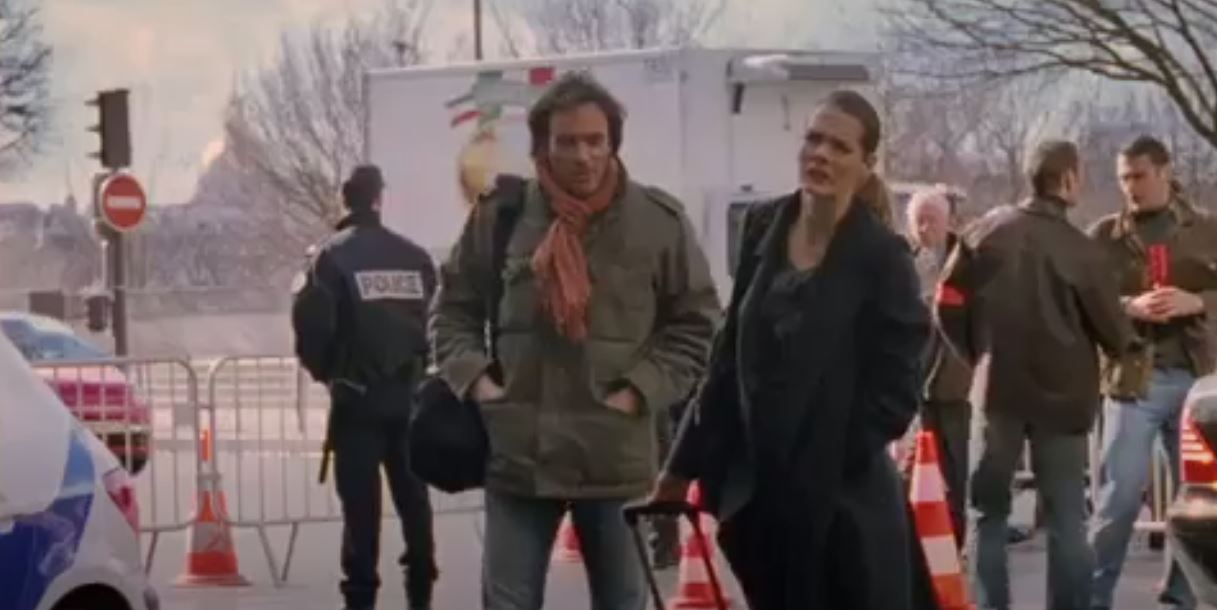
The main premise of JACKIE COLLINS’ PARIS CONNECTIONS is basically the same as in L. A. CONNECTIONS: American reporter Madison Castelli (Nicole Steinwedell) flies to Paris to investigate a murder mystery involving dead models during Fashion Week. There she hooks up, in more ways than one, with old fling and photographer Jake Sica (Anthony Delon) who agrees to help her with the case.


Shot on location, JACKIE COLLINS’ PARIS CONNECTIONS is a sight for sore eyes with its panorama view of the City of Light and the many glittery sequences of the fast-moving jet setters. Whether focusing on a catwalk or simply on a terrace café director Harley Cokeliss (BLACK MOON RISING) clearly succeeds in capturing the essence of Collins vision in the French capitol. Story wise, Michael Tupy does a fine job translating the author story to the screen. His understanding of the characters, especially of the heroine, makes for a fine light-hearted mix of romance and suspense. The entire cast seem to enjoy themselves as well, including GAME OF THRONES Charles Dance and the late international star Anouk Aimée (A MAN AND A WOMAN) who makes a delightful cameo as a sought-after but headstrong designer.


Nicole Steinwedell who, as noted earlier, plays the sassy heroine is completely new to me. She already has quite an impressive acting resume, however, in shows like DAWSON’S CREEK, TWO AND A HALF MEN, CSI and feature films like A SINGLE MAN. In 2024, according to Wikipedia, she was appointed Vice-President and Banker for a private firm in New-York. So my guess is that she’s put her acting chomps aside for a career in finance. We wish her well. Maybe she’ll turn up in something else someday. She sure is a good enough actress.


JACKIE COLLINS’ PARIS CONNECTIONS may come down to as nothing more than a frivolous whodunit whose time is indeed more spent on looks than substance, and still I dig it—as expected. If you’ve managed to make it thus far through this post, guess what: you‘re addicted to this type of cinematic brain candy just as I am. And for that I only have one thing left to say: respect.


Until next post—Martin


Wednesday, 22 January 2025

BAD GIRLS CLUB: CARROLL BAKER IN ‘SYLVIA’


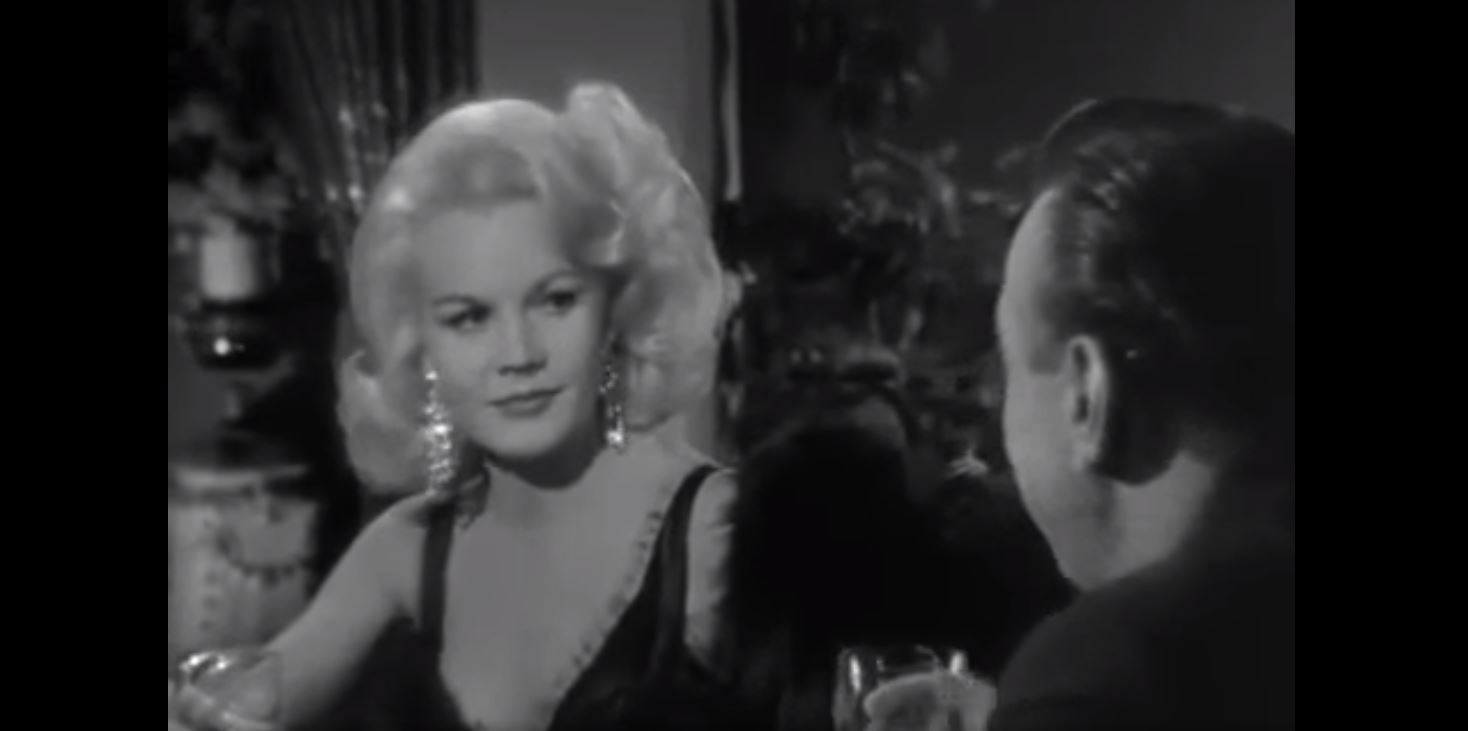
You could easily say that I’m a Carroll Baker fan. I have yet to see everything she’s in but I’ve seen enough to consider myself a proud connoisseur of her work—especially after catching her in the 1964 Harold Robbins adaptation of THE CARPETBAGGERS which is long overdue to be spotlighted on this blog. But as for now, I’d like to focus on SYLVIA, a film she’s made a year later and one that equally deserves the spotlight.


The film begins when Baker’s just about to marry one of the wealthiest men in California, played by the still dashing Peter Lawford. Unbeknownst to her, however, her groom-to-be hires a private detective to do a background check. This investigator is none other than gay-closeted and former Playgirl centerfold George Maharis. Maharis goes back to her hometown and discovers that financially free (!) and talented poet Baker—she has a book published—holds a big secret that involves a heavy past. I won’t get into all that but if you enjoy sleaze and melodrama like I do you’ve certainly come to the right film.  Oh boy did you.


Yet surprisingly, underneath all that on-screen craziness hides a sensitive film worth noticing, mostly due to Baker’s strong performance as a lost soul. She succeeds in making Sylvia likable and, in return, generates some form of empathy which of course can only be a good thing. At least that’s how I felt when I watched the film—twice. As for Maharis, he’s fine as well—so is Paul Gilbert as a wisecracking drag queen (yes, a drag queen)—but it’s Baker who impresses the most. I admit, SYLVIA is not for everyone. It’s hard to watch at times and it’s probably why it got so panned by the critics but the overall delivery is quite fetching, in my opinion.


SYLVIA is based on a novel of the same name by best-selling author Howard Fast who used a pseudonym. Superstar Paul Newman was one time attached to the project but eventually opted put. The original director, David Miller (1960 MIDNIGHT LACE starring Doris Day), ended up being replaced by Gordon Douglas (the delightfully trashy CLAUDELLE INGLISH from 1961). So this leads to believe the film was a trouble shoot. Also, I remember reading somewhere that Baker threw a tantrum when she complained to deaf hears about the script, or something like that.


Despite of all of this, I think the film turns out better than its reputation makes it out to be. But hey, I’m the guy who thinks THE LONELY LADY is a great piece of art. In the end it comes down to what turns you on as a viewer but you’ll certainly be missing something if you fail to give SYLVIA a try.


Until next post—Martin


Monday, 12 August 2024

‘SCANDALOUS WOMEN’ BY GILL PAUL


First and foremost I’d like to thank NetGalley and the publisher for handing me this ARC in exchange for an honest review, so without further ado...


SCANDALOUS WOMEN is my introduction to Gill Paul’s work even though I already own many novels by her (yes, you can say that I’m a bookaholic). The reason I chose this one is quite simple. It’s all about my two favorite Js: Jacqueline and Jackie. Jacqueline Susann and Jackie Collins, that is. Yes, both women are featured in this historical fiction novel that begins when VALLEY OF THE DOLLS is about to get published. From then on the reader meets budding novelist Jackie Collins married to her first but troubled husband and fictitious Nancy White who ends up working for Jacqueline Susann’s publisher Bernard Geis. Like in Valley, each chapter is focused separately on a main character.


The trio eventually meet but the story really centers around the relationship between Susann and White (while struggling Collins tries to finish her first novel in the UK), which is fine in itself as it keeps reality (Susann and VALLEY OF THE DOLLS) and fiction (White’s advocating the novel) bound together. As soon as the story takes a turn to focus on Nancy’s unlucky love life, however, SCANDALOUS WOMEN somehow falters. Not as exciting, alas, and this reviewer ends up craving even more for the two Js and their eventual fictitious meeting.


When it does happen, what’s thought to become addictive ends up being only so-so. What the book may lack is a sooner approach to their get-together. It takes pages and pages of biographical events before the ultimate crossing of each other’s lives, and, in the long run, this overshadows any form of excitement when we do get there.


Still, the author sure knows her subjects and the narrative is solid enough (minus some anachronisms like one character punching the air in happiness, an untypical move for the ‘60s era).  I would say go for it, if you have yet seen Collins excellent documentary LADY BOSS or read Barbara Seaman’s 1987 bio about Jacqueline Susann called LOVELY ME. Other than that if your main goal is to focus more on the fictitious character Nancy White then you will be served, since her story does to a degree read like a Collins or Susann novel.


You can purchase SCANDALOUS WOMEN wherever books are sold.


Until next post—Martin


Sunday, 30 June 2024

“THE AGE OF MELODRAMATIC MINISERIES” BY SCOTT HUMPHRIES.


If you’re into glitzy miniseries from the ‘80’s like I am—and I have a big hunch that you are if you’re reading this—and if you’re always on the lookout for something related, well have I got the book for you. Oh yes, THE AGE OF MELODRAMATIC MINISERIES by Scott Humphries is a fascinating look at all the minis made between 1980 and 1995. And let me tell you, this guy knows his stuff.


Fool of me to ever think that I was perhaps the sole go-to when concerning miniseries and books from which they are based. Of course, other people, like this Scott Humphries fellow here, could be as knowledgeable, if not more. I recently discovered him on Facebook.  After happily browsing his online page I told myself that I had to get a copy of THE AGE OF MELODRAMATIC MINISERIES, and I’m so glad I did.


This highly entertaining book brings you right back into the era of high-budget TV adaptations based on American trashy bestsellers found mostly in supermarkets and airports. Moreover, the book also goes abroad by focusing on other minis derived from original ideas like Australian FLAIR and RING OF SCORPIO which I barely knew about. Humphries takes an in-depth look at all of their glorious and sometimes not so glorious productions and gleefully shows us what made them tick. 


From ‘Defining the Genre’ (‘Character Types and Tropes’...) to ‘Analyzing the Texts’ (‘Work, Power and Conflict’...) Scott’s thesis-like book is fun, insightful, filled with on-set photographs and publicity stills, and will certainly make you feel nostalgic. A truly treasure trove for lovers of ‘80s miniseries everywhere. So, go on, do as I did. Take a look at THE AGE OF  MELODRAMATIC MINISERIES and enjoy the ride.


Until next post—Martin